

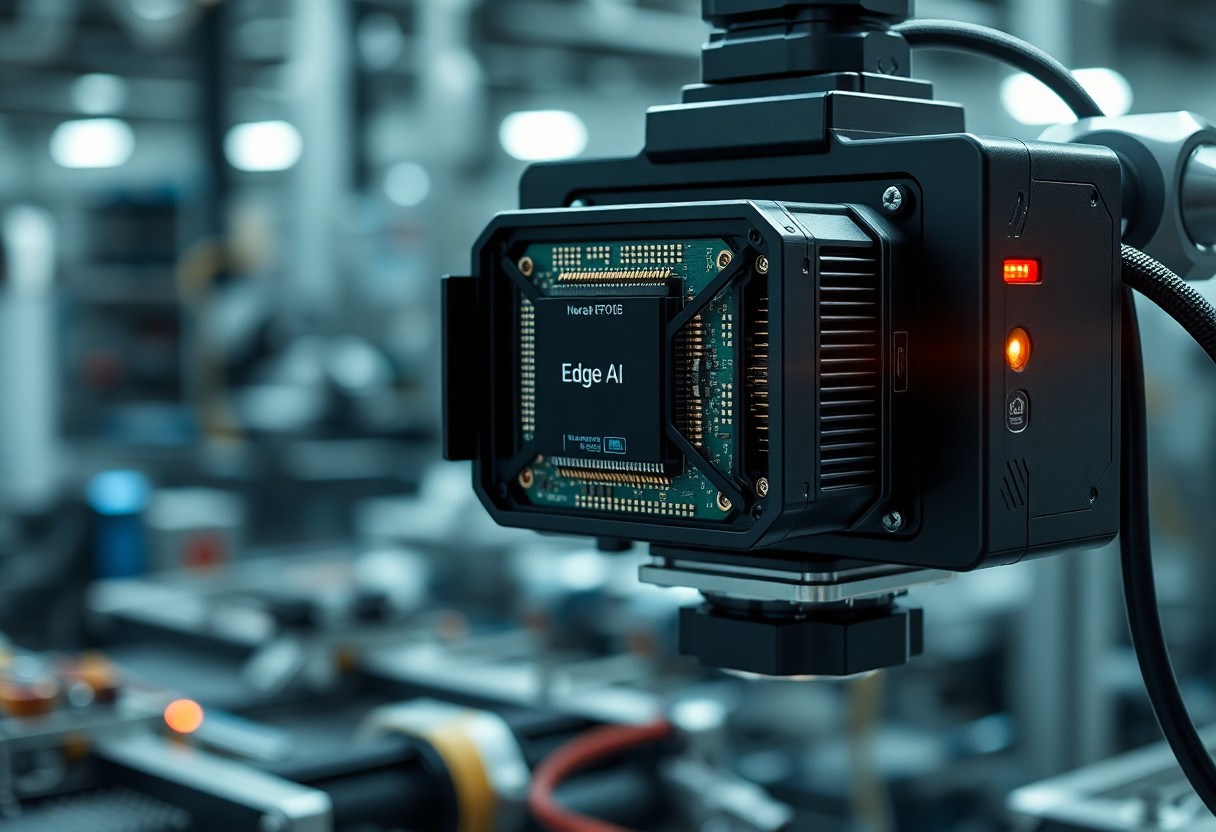
Many organizations are investing in Edge AI to run models on-device, letting you reduce latency, minimize bandwidth and safeguard your sensitive data while maintaining real-time decision-making; this shift matters now because device compute, optimized models, and regulatory pressures force you to prioritize local inference for your performance, resilience, and privacy needs.
Understanding Edge AI
You see Edge AI when models run on-device to cut latency and preserve privacy; real deployments report bandwidth reductions up to 90% and inference latencies often measured in single-digit milliseconds. If you want deeper context, read Why artificial intelligence at the edge matters for practical examples across industrial, retail, and healthcare use cases.
Definition and Concept
Edge AI means executing ML inference (and occasionally lightweight training) on endpoints-sensors, cameras, gateways, or phones-so you avoid round trips to the cloud, lower egress costs, and keep raw data local. You deploy compact models using techniques like quantization and pruning to meet power and memory envelopes while still delivering responsive behavior for tasks such as anomaly detection, on-device speech recognition, and visual inspection.
Key Technologies Involved
You rely on hardware accelerators (NPUs, VPUs, edge GPUs), software stacks (TensorFlow Lite, ONNX Runtime, TinyML toolchains), and model-optimization techniques (8-bit quantization, pruning, distillation) to make on-device inference feasible; quantizing to 8-bit can shrink model size roughly 4x and often speeds inference by 2-3x on constrained hardware.
To implement this you pick components by use case: Coral Edge TPU, Intel Movidius, and NVIDIA Jetson are common for vision-heavy workloads, while Cortex-M MCUs paired with TinyML libraries support ultra-low-power sensors with as little as a few hundred kilobytes of RAM. You also leverage containerization on gateways, hardware-aware NAS for model selection, and federated or periodic cloud sync for model updates-examples include predictive maintenance systems that infer locally and send only anomalies, reducing cloud costs and enabling sub-100ms responses.
Importance of On-Device Intelligence
On-device intelligence slashes round-trip latency from hundreds of milliseconds to single-digit milliseconds, so your app responds like a local process instead of waiting on the cloud. In practice, that means smoother AR at 60-120 fps, camera features running 2-3x faster on dedicated NPUs, and reduced bandwidth costs because raw sensor streams never leave the device. Companies from Apple to Qualcomm ship dedicated accelerators so you can deliver immediate, reliable experiences while complying with regional data rules.
Real-time Processing
When you need hard real-time behavior-autonomous braking, haptics, or live AR overlays-processing at the edge meets strict deadlines that cloud round-trips cannot; many safety systems target ≤10 ms inference windows. Edge platforms like NVIDIA Jetson or mobile NPUs handle concurrent sensor fusion and vision models, enabling full-pipeline inference (camera→pose→action) within a single frame, which you rely on to keep latency bounded and user motion feeling natural.
Data Privacy and Security
Processing sensitive signals locally keeps raw audio, images, and health telemetry on your device, reducing exposure and simplifying compliance with GDPR or HIPAA. By sending only anonymized features or model updates instead of raw records, you lower legal risk and the volume of data an attacker could exfiltrate. Many healthcare wearables already perform on-device ECG classification to avoid transmitting PHI unless a clear alert is triggered.
Beyond minimizing transmission, you can combine federated learning, secure enclaves, and attestation to harden privacy: federated updates (used by Google for Gboard) let your model improve without sending typed text; Trusted Execution Environments like Apple’s Secure Enclave, ARM TrustZone, or Intel SGX protect keys and model weights; and signed OTA model updates ensure integrity. Applying end-to-end encryption for any necessary uploads plus on-device differential privacy techniques further reduces re-identification risk while keeping your features useful.
Applications of Edge AI
You encounter Edge AI across consumer gadgets, factories, vehicles, healthcare devices and retail sensors where on-device inference reduces latency and network load. Apple’s A14 Neural Engine, for example, delivers up to 11 trillion operations per second to power Face ID and local Siri tasks, while smart cameras and wearables send only metadata to the cloud, enabling sub-100 ms responses for alerts and conserving bandwidth on dense deployments.
Consumer Electronics
In smartphones, earbuds and cameras, Edge AI runs noise suppression, wake-word detection and image enhancement locally so your device responds without cloud round-trips; Google Pixel and Apple devices perform on-device speech and photo processing to preserve privacy and lower latency. You get features like real-time HDR, gesture recognition and battery-optimized inference using dedicated NPU cores and DSP pipelines that process dozens of frames per second with millisecond-scale latency.
Industrial Automation
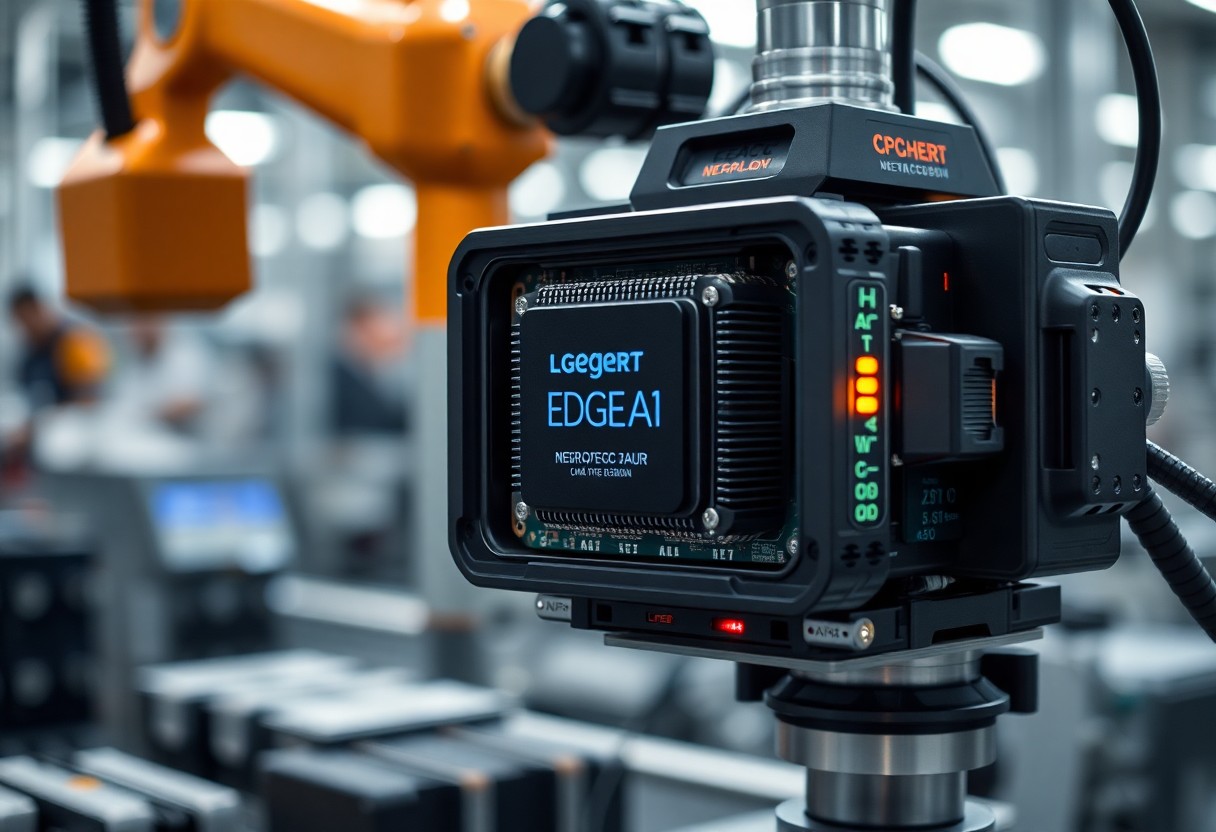
Edge modules such as NVIDIA Jetson and Intel Movidius enable real-time visual inspection at 30-60 fps with sub-50 ms inference, letting you catch defects and reject parts instantly on the line. You can deploy vibration and thermal anomaly detection on PLC gateways to trigger maintenance workflows, reducing manual checks and accelerating mean time to repair in high-throughput plants.
Integrating private 5G and Time-Sensitive Networking (TSN) brings closed-loop latencies under 10 ms for robot motion control and coordinated AGV fleets, so your control loops run predictably. Federated learning lets you update models across sites without moving raw sensor data, protecting IP while improving accuracy, and on-device inference maintains operations during WAN outages so your production never halts waiting for cloud connectivity.
Challenges and Solutions
Device Limitations
You face strict compute and memory ceilings: many microcontrollers offer 256 KB-2 MB RAM and low-MHz cores, while edge platforms like Raspberry Pi or Jetson Nano sit in the 512 MB-8 GB range. You mitigate this by applying 8-bit quantization, channel pruning and knowledge distillation to shrink models 4-10x, and by using TensorFlow Lite, TinyML, or vendor accelerators to regain throughput-e.g., converting a ResNet-block to a 1-5 MB footprint often makes real-time inference feasible on constrained hardware.
Connectivity Issues
Intermittent links and latency force you to design for offline-first operation: cellular latency commonly ranges 30-100 ms, satellite can exceed 500 ms, and packet loss spikes in industrial settings. You therefore push inference to the device to avoid streaming raw video, which can cut upstream bandwidth by up to 90% in pilot deployments, and architect fallback behaviors so your application degrades gracefully when the network drops.
To handle sync and updates you use techniques like store-and-forward, adaptive sync schedules, and protocol choices such as MQTT or CoAP to minimize chatter; federated learning (used by Google for Gboard) lets you improve models without centralizing raw data, and OTA model delta updates-often megabytes or less per round-keep devices current while limiting transfer costs and preserving privacy.
Future of Edge AI
As you deploy more intelligence on-device, latency drops to single-digit milliseconds and privacy controls stay local; enterprises are already using Edge AI to trim cloud egress and storage costs while meeting regulatory constraints. See practical implementations in What Is Edge AI and How Does It Work? for examples like Jetson-powered inference in cameras and factory lines processing video at 30-60 fps without cloud roundtrips.
Trends and Innovations
You’ll notice tinyML, federated learning, model pruning and 4- to 8-bit quantization driving adoption: models compressed by 10-100x run on microcontrollers, and federated updates keep personal data on-device while improving accuracy. Vendors are also shipping domain-specific accelerators and software stacks so you can deploy real-time vision, audio, and sensor fusion workloads with lower power and higher resiliency.
Market Predictions
Analysts expect double-digit CAGR for Edge AI solutions as enterprises push inference to endpoints; Gartner predicts that by 2025 roughly 75% of enterprise-generated data will be created and processed outside traditional data centers, so you should plan architectures that prioritize local processing and selective cloud sync.
Digging deeper, you’ll want to budget for edge infrastructure growth across retail, manufacturing, healthcare and transportation: use cases like in-store analytics, predictive maintenance, continuous patient monitoring and autonomous vehicle stacks each drive different hardware and lifecycle costs. Pilot projects often show 50-90% reductions in bandwidth and storage for video-heavy systems, and you should evaluate total cost of ownership that includes device management, model updates (federated or OTA), security attestation, and edge-native observability to realize the projected ROI over three to five years.
Final Words
On the whole you should prioritize Edge AI because it lets your devices run intelligent functions with lower latency, enhanced privacy, reduced dependence on constant connectivity, and more efficient power use. Embracing on-device intelligence enables you to deliver responsive, secure experiences, retain control of sensitive data, and gain real-time insights where they matter most.
FAQ
Q: What is Edge AI and how does it differ from traditional cloud-based AI?
A: Edge AI refers to running machine learning models directly on local devices (sensors, phones, gateways, cameras) rather than sending raw data to centralized cloud servers. This architecture reduces latency because inference happens close to the data source, lowers network bandwidth and cloud costs by avoiding continuous uploads, and enables operation in limited- or no-connectivity environments. Compared with cloud-based AI, Edge AI shifts compute and storage constraints to device hardware, requiring models and pipelines optimized for smaller memory, lower power, and variable compute capability.
Q: Why does on-device intelligence matter now for businesses and products?
A: On-device intelligence matters now because device hardware (mobile SoCs, NPUs, microcontrollers) has advanced enough to run sophisticated models efficiently, while data privacy regulations and customer expectations are pushing processing out of centralized data centers. Edge AI allows faster decision-making for real-time applications (e.g., AR/VR, industrial control), reduces recurring cloud costs by limiting data transfer, and improves resilience by enabling local operation during network outages. These factors make Edge AI a practical choice for organizations seeking performance, cost control, and stronger privacy assurances.
Q: What are common use cases where Edge AI provides clear advantages?
A: Edge AI is especially valuable in scenarios requiring low latency, privacy, reliability, or reduced bandwidth. Examples include autonomous vehicles and ADAS where milliseconds matter; smart cameras and home devices that process video locally to protect user privacy; industrial IoT systems that keep factory control loops running without cloud dependence; wearable health monitors that process sensitive biometric data on-device; and retail or logistics deployments that filter or aggregate sensor data before sending summaries to the cloud. In each case, Edge AI improves responsiveness, privacy posture, and operational continuity.
Q: What technical challenges and optimizations are required to run AI on edge devices?
A: Running AI on-device requires model compression and optimization techniques-quantization, pruning, knowledge distillation, and architecture search-to fit memory and compute budgets. Engineers must consider power management, thermal limits, and inference latency, and often use hardware accelerators (NPUs, DSPs) and optimized runtimes (TensorFlow Lite, ONNX Runtime, vendor SDKs). Data pipeline design, on-device pre- and post-processing, and efficient batching are also important. Finally, testing across device variants and maintaining model quality under constrained precision are ongoing challenges for Edge AI projects.
Q: How are security, privacy, and lifecycle management handled for Edge AI deployments?
A: Security and privacy for Edge AI combine device-level hardening, encrypted storage and communication, and privacy-preserving techniques like on-device anonymization or federated learning. Models and data should be signed and delivered securely; hardware-backed key storage and secure boot help resist tampering. Lifecycle management includes over-the-air model updates with rollback capability, monitoring for model drift, and logging that respects privacy limits. A hybrid approach-doing sensitive inference on-device and sending aggregated results to the cloud for analytics or retraining-balances protection, observability, and continuous improvement in Edge AI deployments.