

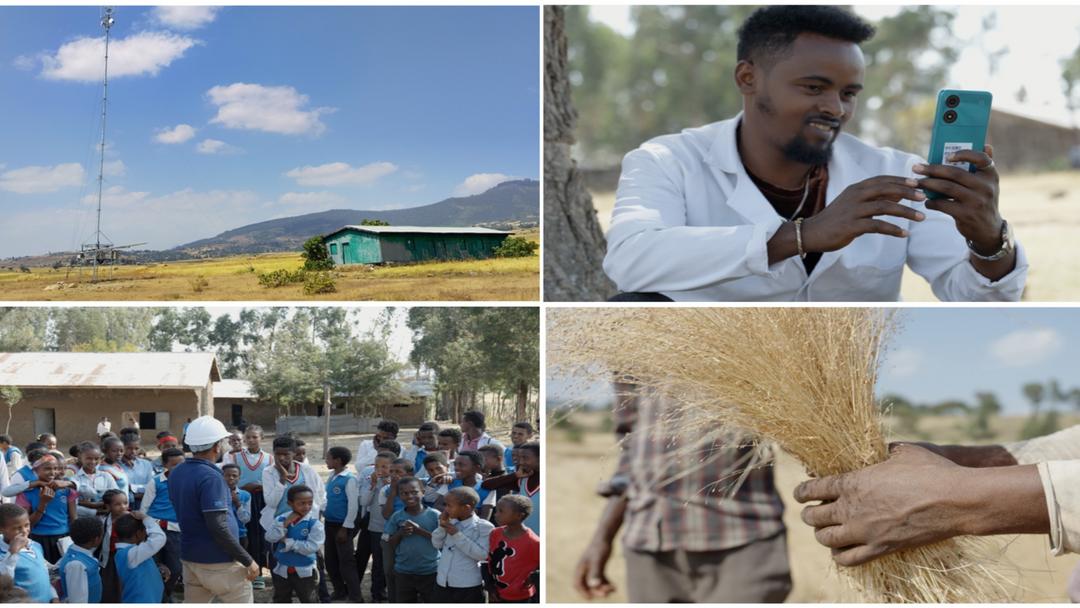
Digital Ethiopia 2025 gained momentum as ZTE and Ethio Telecom activated 152 rural base stations serving over one million people. The sites extend 2G, 3G, and 4G to remote communities.
The rollout uses energy-efficient infrastructure, solar power, and low-cost devices to overcome terrain, cost, and power constraints that have slowed rural connectivity.
It aligns with national goals for inclusive growth and expands the footprint of essential digital services, including mobile broadband and Telebirr payments.
Digital Ethiopia 2025: What You Need to Know
- ZTE and Ethio Telecom switched on 152 rural sites delivering 2G, 3G, and 4G to more than one million people across underserved regions.
Recommended tools for rural connectivity, security and operations
- Auvik monitors and manages distributed networks with real-time visibility.
- Bitdefender for layered endpoint protection across challenging terrains.
- IDrive for secure cloud backup in low-bandwidth environments.
- EasyDMARC to stop email spoofing and protect rural users.
Digital Ethiopia 2025: Rural coverage at scale
152 ZTE Ethio Telecom rural base stations now live
ZTE Corporation and Ethio Telecom have completed 152 rural sites across remote regions, a core delivery under ZTE’s Signal Reach Program.
The deployment brings 2G, 3G, and 4G services to underserved communities and lifts Ethiopia’s mobile network coverage in remote areas where challenging geography and unstable power have slowed progress.
The milestone advances Digital Ethiopia 2025 commitments to inclusive, technology-driven growth.
How the Rural Ecosystem Works
To meet remote site requirements, ZTE’s end-to-end Rural Ecosystem combines energy efficiency, long-range connectivity, and accessible devices. The approach underpins Digital Ethiopia 2025 outcomes while containing the total cost of ownership.
EcoSite
Low power, all outdoor base stations offer multi-band support and 5G readiness. Microwave backhaul extends single-site reach up to 50 kilometres to ease transmission constraints. Integrated Wi Fi enables remote operations and maintenance.
EcoEnergy
An integrated energy stack blends solar generation with smart lithium batteries. The iEnergy platform coordinates charge cycles to maximise efficiency and site uptime in off-grid locations.
EcoDevice
Affordable smartphones, CPEs, and MiFi units bring users online as coverage arrives. This supports Digital Ethiopia 2025 objectives for equitable access across rural communities.
Fast, low-cost rollout with modular towers
Construction used a Lego-style modular tower design that cut costs by 80 percent and reduced deployment cycles by 75 percent compared with traditional builds.
ZTE’s iEPMS 4.0 and intelligent tools, such as Netmax-supported site rollout, network operations, and optimisation, are helping Digital Ethiopia 2025 timelines in difficult terrain.
Connectivity milestones at Ethio Telecom
As of October 2025, Ethio Telecom serves 86.1 million customers with 99.4 percent population coverage and a tele density of 76.5 percent.
Mobile voice totals 83.61 million users, and mobile broadband has reached 47.06 million. Under Digital Ethiopia 2025, 4G population coverage rose from 37.5 percent in 2024 to 70.8 percent in 2025, driven by expansion in underserved regions and partnerships with technology providers such as ZTE.
Digital inclusion also spans financial services. Through rural expansion and Telebirr, 57.59 million people, particularly the unbanked, now access digital financial and essential services.
These gains reflect sustained Digital Ethiopia 2025 execution.
Every day impact, schools, health, conservation and livelihoods
By September 2025, the ZTE and Ethio Telecom network covered more than 100 low-density regions. Farmers and herders use online resources and Telebirr for electronic payments that support local economies.
Nearly 100 schools have gained digital learning access, and villagers benefit from remote medical consultations. National parks, including Bale Mountains National Park, apply connectivity to protect endangered species and grow responsible tourism.
Training for hundreds of local technicians supports the skills pillar within Digital Ethiopia 2025.
Part of a wider African programme
ZTE, recognised by the ITU as a Partner2Connect champion, is advancing its Signal Reach Program across 20 African countries.
Highlights include solar-powered EcoSite deployments serving over one million rural users in Liberia, a 360-kilometre backbone microwave route through Cameroon’s mountains and forests serving 13 million users, 5G ultra long range marine coverage in South Africa, and high-speed broadband across more than 1,500 villages in Egypt.
These initiatives, like Digital Ethiopia 2025, support the UN Sustainable Development Goals and long-term digital inclusion.
Security and resilience considerations
As coverage expands under Digital Ethiopia 2025, network protection remains critical. Sector guidance highlights emerging 5G cybersecurity risks and opportunities, and recent reporting shows telecoms are frequent targets for state-linked espionage.
Adopting modern zero-trust architecture can harden remote deployments and protect essential services as rural data use grows.
Context across Africa
Rural broadband investment mirrors regional trends in spectrum, backhaul, and last-mile innovation. See related analysis on 5G in Africa and next generation connectivity and the evolution of African telecoms from 2010 to 2026.
Policy coordination remains vital, as illustrated by ITU-backed initiatives for rural builds in West Africa, including solid rural connectivity in Nigeria.
What this rollout means for Ethiopia’s digital future
The advantages include broader access to voice and data, stronger local economies, digital payments through Telebirr, improved education and health outcomes, enhanced conservation, and new technical skills.
Energy smart sites and modular towers cut costs and time, helping Digital Ethiopia 2025 reach more communities faster.
Challenges persist. Remote operations face harsh environments, power constraints, and higher logistics costs. As usage grows, backhaul capacity, spectrum planning, and 5G migration will require careful management.
Expanded reach also increases exposure to cyber threats, calling for robust security and continuous optimisation in line with Digital Ethiopia 2025 targets.
Implications for Ethiopia’s mobile network coverage in remote areas
This project demonstrates scalable methods to extend resilient broadband beyond cities. The model blends efficient radio access, long-reach microwave, solar energy, and affordable devices to lower the total cost of ownership.
It directly supports Digital Ethiopia 2025 by enabling digital services that raise productivity and inclusion.
There are trade-offs. Modular builds and solar improve speed and sustainability, but operators must plan for seasonal energy patterns, equipment hardening, and spare parts logistics.
Security by design and zero trust controls should be embedded from installation to operations to protect Digital Ethiopia 2025 services.
Essential security and productivity picks for expanding networks
Conclusion
The ZTE and Ethio Telecom partnership shows how engineering innovation, green energy, and accessible devices can accelerate Digital Ethiopia 2025 in the hardest-to-serve areas.
By combining rapid rollout with strong operations and training, the programme turns connectivity into practical outcomes, from learning and healthcare to livelihoods, conservation, and digital finance.
Sustained focus on resilience, security, and inclusive service design will help Digital Ethiopia 2025 narrow the digital divide and support Ethiopia’s next phase of socio-economic growth.
Questions Worth Answering
What was deployed and where?
- 152 rural sites were activated across remote regions, providing 2G, 3G, and 4G to more than one million people under Digital Ethiopia 2025.
How do the sites stay online off-grid?
- Solar generation with lithium batteries, coordinated by the iEnergy platform, maximises uptime and reduces operating cost.
What made rollout faster and cheaper?
- A Lego-style modular tower approach cut build costs by 80 percent and shortened deployment cycles by 75 percent.
How will this affect education and health?
- Nearly 100 schools gained digital learning access, and communities receive prompt remote medical consultations.
What are the key performance figures at Ethio Telecom?
- 86.1 million customers, 99.4 percent population coverage, 76.5 percent tele density, and 4G coverage growth from 37.5 to 70.8 percent in one year.
What security steps are advised?
- Adopt zero trust controls, follow 5G risk guidance, and strengthen monitoring, as telecoms are frequent targets for state-linked espionage.
About ZTE
ZTE is a global provider of integrated information and communication technology solutions that designs, builds, and manages telecom networks at scale.
In Africa, the company advances rural connectivity through its Signal Reach Program, which targets rapid, low-energy deployments.
Its Rural Ecosystem integrates low-power sites, green energy systems, and affordable devices to extend coverage in hard-to-reach areas.
About Ethio Telecom
Ethio Telecom is Ethiopia’s national operator and serves 86.1 million customers with near universal population coverage across the country.
The company leads rural expansion and grew 4G coverage from 37.5 percent in 2024 to 70.8 percent in 2025 through strategic partnerships.
Its Telebirr platform enables tens of millions, including unbanked users, to access digital financial and essential services nationwide.
Power growth with these picks, Plesk, KrispCall and Bolt Business. Scale services, streamline calls and move teams smarter.