

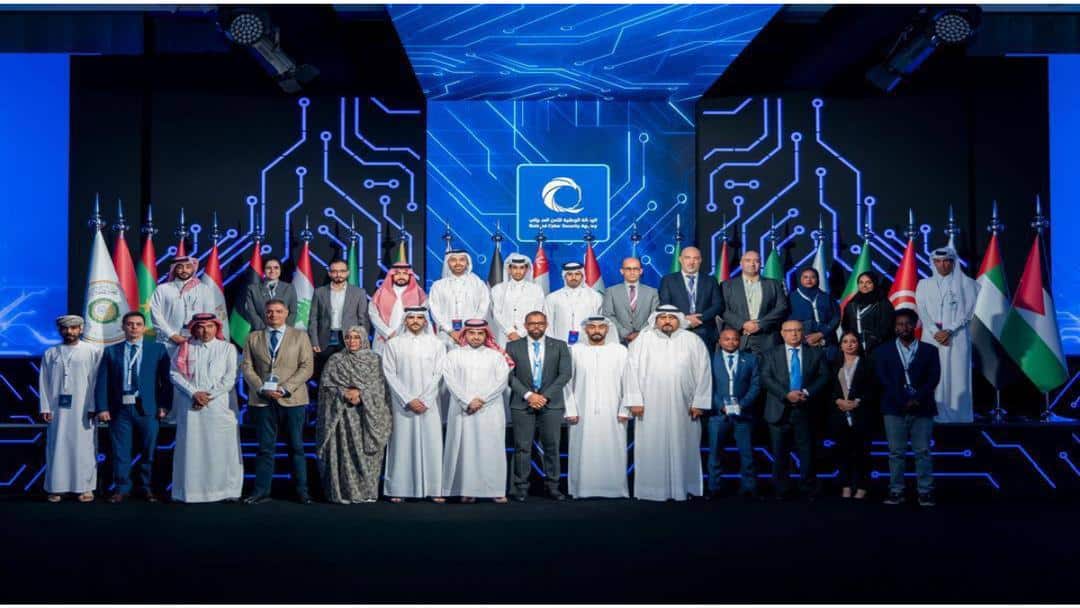
Arab cyber exercise cooperation moved forward in Doha as Mauritania joined the inaugural regional training led by Qatar’s National Cyber Security Agency. The event gathered Arab states to test joint readiness and response.
Mauritania deployed a multi-disciplinary team from the Ministry of Digital Transformation and Administrative Modernization to strengthen incident coordination and decision-making under pressure.
The programme combined executive coordination with hands-on simulations to improve detection, containment, recovery, and cross-border communication during major cyber incidents.
Arab cyber exercise: What You Need to Know
- The Arab cyber exercise in Doha aligned Arab state responders through practical simulations, shared standards, and faster incident coordination.
Recommended tools for cyber resilience
- Bitdefender — advanced endpoint protection and threat prevention.
- 1Password — enterprise password management and secure access.
- IDrive — encrypted cloud backup and rapid recovery.
- Tenable — continuous vulnerability assessment and exposure management.
Regional mission and objectives
The Arab cyber exercise was designed to deepen cybersecurity cooperation across Arab states and to raise technical and administrative readiness for coordinated response. It tested joint processes from initial triage to containment and recovery.
For Mauritania, the Arab cyber exercise offered a structured environment to rehearse escalation paths, validate playbooks, and benchmark capabilities against regional peers. It also reinforced consistent communication and shared standards for crisis management.
Mauritania’s delegation and roles
Mauritania’s delegation included Machian Aswed Ahmed (attached to the Minister’s Council), Zeinab Bonn (Consultant for Strategic Affairs and Digital Inclusion), Didi Al Hussein (Assistant Director for System and Security Administration), Al Moktar Salem Al Nahi (Head of System and Security Administration), and Hussein Ahmed (Department Head, Administration and Security).
Their contribution to the Arab cyber exercise reflected whole-of-government coordination.
Training format and scenarios
The training day combined a briefing on objectives with hands-on simulations that stressed decision-making and incident handling. This cyber attack response training helped teams refine operating procedures and strengthen technical to executive communication.
By mirroring real-world pressures, the Arab cyber exercise encouraged faster, clearer actions during incidents while maintaining control of critical services.
From objectives to execution
Exercises reinforce incident response fundamentals, from role assignment to post-incident reviews. For context on core practices, see What is Cyber Incident Response and case learnings in Lessons from Major Incident Response Cases. Scenario-specific guidance, such as Incident Response for DDoS Attacks supports repeatable action.
In this setting, the Arab cyber exercise provided a proving ground for policies, playbooks, and cross team coordination that reduce impact and accelerate recovery.
Organisers and governance
The event was organised by Qatar’s National Cyber Security Agency with the General Secretariat of the Council of Arab Cyber Security Ministers. Governance ensured the Arab cyber exercise aligned with regional priorities while respecting national mandates.
This structure also highlighted the value of Mauritania’s cybersecurity Qatar’s collaboration, showing how host nation facilitation and multilateral oversight can accelerate capability building and peer learning.
Regional efforts of this kind complement broader initiatives to counter cybercrime, including cross-border partnerships such as South Africa and France’s cooperation to combat cybercrime, and targeted awareness on risks like phishing and compromised passwords. Organisations can also strengthen staffing with guidance on hiring cyber threat intelligence analysts.
Implications for regional cyber resilience
Advantages:
The Arab cyber exercise strengthened trust across operational teams and policymakers, set shared readiness expectations, and improved practical skills needed during live incidents. Joint rehearsals increase the likelihood of early warning exchange, harmonised communications, and faster restoration of services during cross-border threats.
The focus on cyber attack response training also translates governance into measurable operational gains.
Disadvantages:
Simulations cannot fully replicate the complexity of multi-vector attacks across diverse infrastructures. Without repeat cycles, budget continuity, and periodic playbook updates, improvements can erode. Effective cross-border coordination depends on well-maintained contacts, aligned procedures, and legal clarity that extend beyond a single Arab cyber exercise.
Strengthen your incident readiness
Conclusion
Doha’s programme demonstrated that the Arab cyber exercise can operationalise regional policy through shared practice. Joint drills enabled faster, clearer action during incidents.
For Mauritania, participation validated processes, clarified roles, and refined communication between technical and administrative teams. Follow-up will be key to embedding lessons.
Sustained collaboration anchored by recurring Arab cyber exercise cycles and ongoing cyber attack response training will improve regional resilience and reinforce public trust.
Questions Worth Answering
What is the Arab cyber exercise?
- It is a regional training initiative that aligns Arab states on cybersecurity readiness through executive coordination and hands-on simulations.
Who organised the Doha training?
- Qatar’s National Cyber Security Agency organised it with the General Secretariat of the Council of Arab Cyber Security Ministers.
Why did Mauritania participate?
- To strengthen technical and administrative preparedness, improve incident coordination, and advance Mauritania-Qatar cybersecurity cooperation.
What scenarios were tested?
- Simulations covered detection, escalation, containment, and recovery, reinforcing playbooks through cyber attack response training.
How does the exercise improve coordination?
- It standardises communication, defines roles, and promotes shared procedures for faster joint response.
Will the Arab cyber exercise recur?
- Organisers signalled intent for ongoing cycles to maintain momentum and benchmark progress.
How can organisations prepare between cycles?
- Update playbooks, run tabletop exercises, review contacts, and align training with lessons learned.
About the Ministry of Digital Transformation and Administrative Modernization
The Ministry leads Mauritania’s digital transformation and administrative modernisation agenda, coordinating national policy and implementation across sectors.
It brings together technical and administrative departments to strengthen service delivery, cybersecurity posture, and institutional readiness.
Its participation in Doha aligned national processes with regional peers and advanced cross-government incident coordination.
About Zeinab Bonn
Zeinab Bonn is a Consultant for Strategic Affairs and Digital Inclusion at the Ministry of Digital Transformation and Administrative Modernization.
She focuses on aligning digital policy with inclusive access and secure delivery of public services.
Her role in Doha supported strategic coordination and ensured inclusive perspectives within the Arab cyber exercise.
References and further reading
What is Cyber Incident Response |
Lessons from Major Incident Response Cases |
Incident Response for DDoS Attacks
Explore more solutions: Foxit, Plesk, CloudTalk — power up secure workflows and collaboration today.