

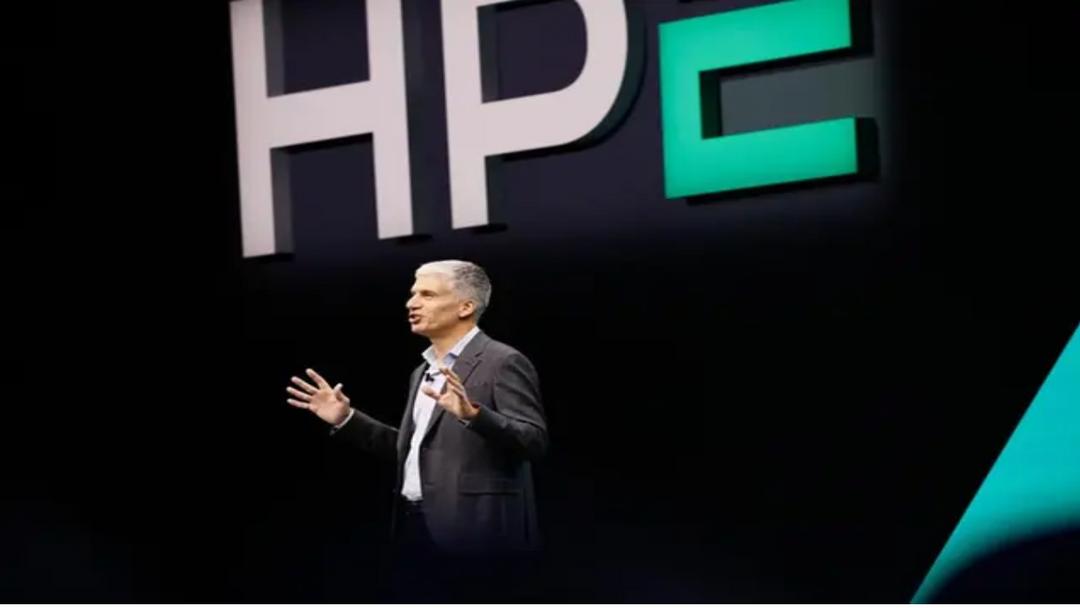
AI-native networking drives Hewlett Packard Enterprise’s latest portfolio expansion as it unifies Aruba and Juniper technologies for autonomous operations. Five months after closing the Juniper deal, HPE detailed a single roadmap spanning campus, branch, data centre and edge. The release focuses on secure, scalable networks built for AI workloads, with unified AIOps, shared hardware and deeper HPE GreenLake integration.
HPE also introduced updates to HPE OpsRamp Software to simplify hybrid operations, plus new Wi‑Fi 7 access points and on‑premises enhancements through Aruba Networking Central On‑Premises 3.0.
New switching and routing aim at high‑throughput GPU fabrics and edge inferencing, backed by collaborations with NVIDIA and AMD to scale AI clusters.
AI-native networking: What You Need to Know
- HPE unifies Aruba and Juniper under one AI-native networking strategy with shared AIOps, common hardware, GreenLake ties, and high-performance switching and routing.
Recommended tools to operationalise AI-native networking and secure your stack
- Auvik: Cloud-based network monitoring to visualise, audit and automate multi-vendor estates.
- Tenable: Continuous vulnerability visibility for hybrid infrastructure and OT/IoT edge.
- Bitdefender: Endpoint security and EDR tuned for lateral movement and ransomware defence.
- 1Password: Enterprise password management with SSO/SCIM integration and Secrets Automation.
Rapid progress on the HPE Juniper Networks integration
HPE’s expanded portfolio advances secure, autonomous networking with a consistent operational model across HPE Aruba Networking and the newly rebranded HPE Juniper Networking.
The combined plan places AI-native networking at the core of campus, branch, data centre and edge designs.
Unified AIOps and common hardware now underpin AI-native networking across both platforms to streamline deployment and lifecycle management.
HPE Juniper Networking’s Large Experience Model is being embedded in HPE Aruba Networking Central, while Aruba’s Agentic Mesh will be accessible to Mist users.
HPE is also adding cross-platform organisational insights, new Wi‑Fi 7 access points, and improved on‑premises capabilities through Aruba Networking Central On‑Premises 3.0, which delivers enhanced automation, analytics and a redesigned interface.
Common AIOps and an agentic framework for hybrid operations
HPE OpsRamp Software gains new capabilities and tighter linkage to HPE GreenLake Intelligence, built on an agentic AI framework to simplify and automate operations across hybrid estates.
Aligning AIOps with AI-native networking positions the network as a performance foundation for AI and cloud applications.
The OpsRamp updates unify telemetry from compute, storage and networking, providing a single command centre for IT teams.
Enhancements include data centre observability via Apstra integration, automated root‑cause analysis, and support for Model Context Protocol to connect AI agents across platforms.
Related optimisation topics, such as smooth transitions during data migration and moving from IPv4 to IPv6, remain crucial as enterprises extend AI-native networking across hybrid clouds.
Purpose-built hardware for high-performance AI
The hardware portfolio expands with switching and routing engineered for AI fabrics.
The HPE Juniper Networking QFX5250, powered by Broadcom Tomahawk 6 silicon, delivers 102.4 Tbps of bandwidth to accelerate GPU‑to‑GPU connectivity in data centres, an essential building block for AI-native networking at scale.
At the edge, the MX301 multiservice router brings high-speed AI inferencing closer to data sources, supporting performance‑intensive environments and extending AI-native networking from core to edge with consistent policy and operations.
For broader connectivity context, see Africa’s momentum with 5G next‑gen connectivity and enterprises securing dedicated cloud connections.
Deeper ties with NVIDIA and AMD for scale
Ahead of HPE Discover Barcelona 2025, HPE expanded collaborations with NVIDIA and AMD, introducing AI factory networking solutions that enhance connectivity from edge sites to large AI clusters.
HPE added support for AMD’s Helios rack‑scale AI architecture, debuting industry‑first scale‑up Ethernet networking, and previewed an HPE Juniper Networking switch designed to support trillion‑parameter training workloads.
These moves bolster AI-native networking for next‑generation training and inferencing.
Financing and availability to ease adoption
To accelerate projects, HPE Financial Services is offering zero‑per‑cent financing for networking AIOps software and new leasing options to reduce upfront spend on AI-native networking.
Product availability will be phased: the MX301 router ships in December 2025; the QFX5250 switch arrives early 2026; and OpsRamp plus HPE GreenLake integrations complete between late 2025 and mid‑2026.
Security and resilience considerations
Security remains central as enterprises modernise for AI-native networking. Industry guidance supports a zero‑trust architecture for network security, while AI‑specific threats such as prompt injection risks in AI systems continue to evolve.
Governance, pervasive telemetry and continuous validation must protect data, models and services across the AI lifecycle.
Enterprise impact: benefits and trade-offs
Operational consistency is the immediate benefit. Unified AIOps, common hardware and shared frameworks standardise tooling and workflows, reducing mean time to resolution and shortening rollout cycles.
This alignment helps teams extend AI-native networking across heterogeneous estates without losing control.
Performance and scale are equally compelling. The QFX5250’s 102.4 Tbps bandwidth supports high-throughput GPU fabrics, while the MX301 pushes inferencing to the edge for latency‑sensitive use cases.
With stronger NVIDIA and AMD ties, enterprises gain a practical path to architecting AI workload networking solutions for both training and inference.
There are trade‑offs. Multi‑platform convergence can raise integration complexity, requiring rigorous planning, testing and change management, particularly when adopting Aruba Networking Central On‑Premises 3.0 or cross‑platform AI features. Upskilling may be necessary to leverage the new toolchain.
Timelines will influence adoption. With key components arriving from late 2025 to mid‑2026, organisations must align budgets, dependencies and programme milestones.
Regions accelerating 5G and IPv6 deployments can more readily capitalise on AI-native networking as infrastructure matures.
Scale and secure AI-native networking with these enterprise-grade platforms
- IDrive: Unified cloud backup and DR for distributed endpoints, servers and NAS.
- EasyDMARC: Enforce DMARC, DKIM and SPF to stop spoofing across hybrid domains.
- Tresorit: End‑to‑end encrypted cloud storage and file sharing with zero‑knowledge controls.
- Plesk: Centralised hosting control for multi‑cloud app estates and DevOps workflows.
Conclusion
HPE has moved quickly post‑acquisition, positioning AI-native networking as the anchor of its Aruba and Juniper portfolio. The roadmap spans autonomous operations, shared telemetry and high‑performance hardware.
With OpsRamp, GreenLake integration and agentic frameworks, HPE makes networks a first‑class platform for AI. New Wi‑Fi 7 access points, data centre switches and edge routers complement cloud management.
Enterprises should map adoption to phased availability, while strengthening zero‑trust and AI governance. For organisations planning large‑scale AI, AI-native networking now presents a cohesive, investment‑ready path.
Questions Worth Answering
What did HPE change in AIOps and management?
- HPE updated OpsRamp with unified telemetry, automated root‑cause analysis, Apstra observability and Model Context Protocol support, integrated with HPE GreenLake Intelligence.
How does the portfolio realise the HPE Juniper Networks integration?
- HPE aligned AIOps and hardware across Aruba and Juniper, embedded Juniper’s Large Experience Model in Aruba Central, and exposed Aruba Agentic Mesh to Mist users.
Which hardware targets AI performance?
- The QFX5250 switch delivers 102.4 Tbps for GPU fabrics, and the MX301 router enables high‑speed edge inferencing with consistent policy and operations.
How does this enable hybrid operations?
- OpsRamp and GreenLake unify compute, storage and networking into one command centre, simplifying management across on‑premises and public cloud estates.
What partnerships extend AI cluster scale?
- HPE deepened collaborations with NVIDIA and AMD, added support for AMD Helios rack‑scale architecture, and previewed switching for trillion‑parameter training.
When are products and integrations available?
- MX301 arrives December 2025; QFX5250 in early 2026; OpsRamp and GreenLake integrations roll out from late 2025 through mid‑2026.
Why is security emphasised in AI-native networking?
- Zero‑trust controls, pervasive telemetry and protection against AI‑specific threats such as prompt injection are essential to safeguard data, models and services.
About Hewlett Packard Enterprise
Hewlett Packard Enterprise is a global edge‑to‑cloud technology company focused on unlocking value from data across compute, storage, networking and services.
Through HPE GreenLake, it delivers hybrid cloud experiences and consumption‑based IT spanning on‑premises and public cloud environments for predictable cost and control.
Its acquisition of Juniper Networks accelerates a strategy centred on autonomous operations, AIOps and high‑performance networking for AI and cloud workloads.
Level up your stack: Build resilient operations with CloudTalk, protect privacy with Optery, and accelerate AI workflows using Blackbox AI.