

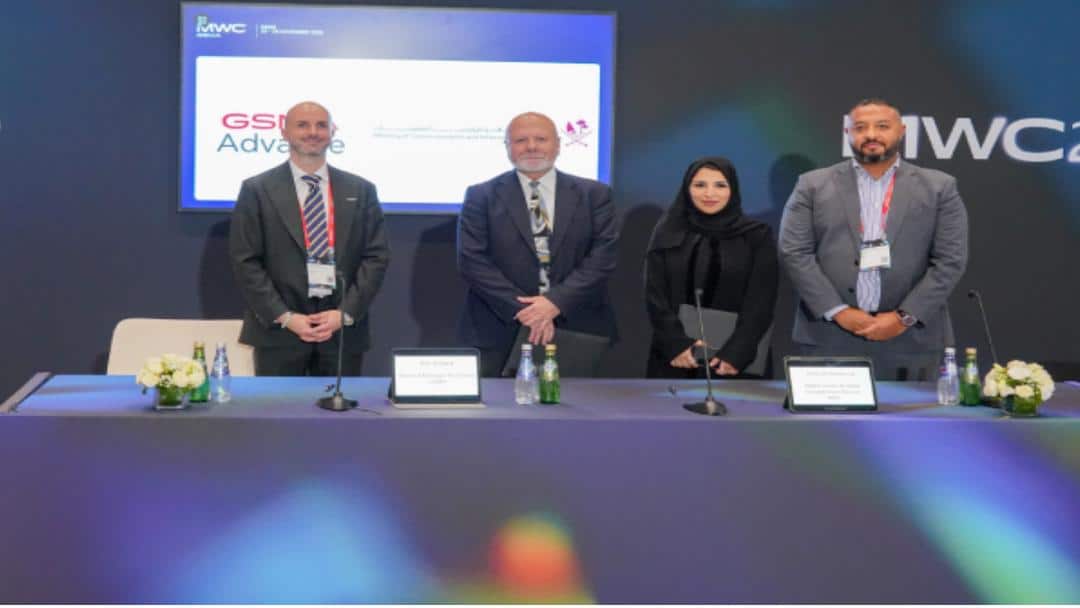
Qatar Digital Academy will expand accredited ICT training under a five-year GSMA Advance partnership to accelerate national digital transformation. The initiative supports skills growth across public and private sectors.
The programme aligns with Qatar Digital Agenda 2030 and targets job creation and sector value growth through scalable, career-ready learning delivered in flexible formats.
The Ministry of Communications and Information Technology expects the effort to strengthen workforce competencies and improve national competitiveness through internationally benchmarked accreditation.
Qatar Digital Academy: What You Need to Know
- A five-year GSMA-backed programme will scale flexible, accredited training to equip Qatar’s ICT workforce for Digital Agenda 2030 objectives.
Recommended tools to build digital skills and secure infrastructure
- LearnWorlds – Launch and monetise professional e-learning programmes.
- Trainual – Standardise SOPs and training for growing teams.
- Tresorit – End‑to‑end encrypted cloud for compliant collaboration.
- Bitdefender – Robust endpoint and network protection.
- 1Password – Enterprise-grade password and secrets management.
- IDrive – Secure cloud backup for business continuity.
- EasyDMARC – Stop spoofing with DMARC, SPF, and DKIM.
- Auvik – Automated network monitoring and visibility.
GSMA Advance partnership Qatar: five-year skills initiative
Under a five-year agreement, the Ministry of Communications and Information Technology and GSMA Advance will expand Qatar Digital Academy to deliver accredited, sector-specific learning at scale.
The collaboration prioritises lifelong learning, aligns curricula to national needs, and embeds international best practice through the GSMA Advance People Excellence Partner Programme.
GSMA Advance will co-develop and accredit programmes tailored to telecoms and ICT roles, enabling the Qatar Digital Academy to broaden its catalogue and streamline delivery across government and industry.
Flexible, accredited delivery for career-ready learning
Qatar Digital Academy will strengthen practical training paths and professional accreditation using a multi‑modal model:
- In-person cohorts for collaborative, hands-on skills development.
- Virtual courses to support remote participation and continuous upskilling.
- Blended learning that balances structure with on‑demand flexibility.
Security capabilities remain a core requirement as digital services scale. For broader context on network resilience, see this overview of 5G cybersecurity risks and opportunities, and guidance on Zero Trust architecture for network security.
Strategic alignment with Qatar’s Digital Agenda 2030
The Qatar Digital Agenda 2030 sets targets to create 26,000 ICT jobs and add 40 billion QAR in sector value by 2030. Qatar Digital Academy will help deliver these outcomes by upgrading skills across the talent pipeline and aligning learning outcomes to in‑demand roles.
The academy will channel international expertise into locally relevant programmes, ensuring professionals develop competencies applicable from day one. This approach positions Qatar Digital Academy to support innovation while improving workforce mobility and productivity.
Leadership perspective and objectives
MCIT leadership views the GSMA partnership as a catalyst for competency development, continuous learning, and innovation.
The vision is to equip Qatar’s workforce with current technological skills, reinforce the delivery of the Qatar Digital Agenda 2030, and strengthen the country’s standing as a regional digital hub.
GSMA Advance expects the collaboration, aligned with activities around MWC Doha, to leave a long-term skills legacy that supports transformation and growth across the ICT ecosystem.
How GSMA Advance strengthens delivery
GSMA Advance brings telecoms-specific training expertise grounded in policy, standards, and innovation. Through its accredited courses, Qatar Digital Academy can benchmark against international standards while meeting local requirements.
By integrating employer needs into course design, Qatar Digital Academy will emphasise demonstrable competencies and recognised accreditation, enabling progression for individuals and capability measurement for organisations.
Regional context and related initiatives
Qatar’s approach mirrors wider efforts to link workforce development with connectivity growth and secure infrastructure.
Comparable programmes and insights across the region include 5G skills and rollout strategies, structured guidance on data migration best practice, and targeted support for sector digitisation such as port modernisation vouchers.
Implications for Qatar’s ICT ecosystem
The Qatar Digital Academy model offers clear advantages. Accredited pathways can raise standards, improve employability, and accelerate the adoption of emerging technologies.
Employers benefit from targeted, reliable training pipelines that support innovation, governance, and quality assurance. Flexible delivery should widen access and help teams balance learning with operations.
Challenges include ensuring equitable access across regions and sectors, sustaining learner engagement at scale, and demonstrating measurable impact. Tracking job placement, skills utilisation, and productivity outcomes will be critical to refining curricula and maintain momentum.
Qatar Digital Academy will also need to continually refresh content to reflect evolving telecoms, cloud, AI, and cybersecurity requirements.
Upgrade your organisation’s digital capability
- Plesk – Streamline secure web hosting and app deployment.
- Tenable Nessus – Identify and remediate vulnerabilities faster.
- Optery – Automate personal data removal from the web.
- Passpack – Team password management with sharing controls.
- CloudTalk – Cloud phone system for hybrid teams.
- KrispCall – Business VoIP to modernise communications.
Conclusion
The GSMA-backed expansion of Qatar Digital Academy marks a decisive push to build a future‑ready ICT workforce. The model blends international standards with national priorities.
By aligning with the Qatar Digital Agenda 2030 and focusing on accredited, flexible training, Qatar Digital Academy can improve capability where demand is strongest and speed up adoption of advanced technologies.
As delivery scales, practical, job‑aligned learning and rigorous measurement will determine impact. Qatar Digital Academy is positioned to anchor continuous professional development across Qatar’s ICT sector.
Questions Worth Answering
What is Qatar Digital Academy’s primary goal?
- To deliver accredited, flexible ICT training that aligns with national digital transformation targets under the Qatar Digital Agenda 2030.
How does the GSMA Advance partnership Qatar support delivery?
- GSMA Advance co-designs curricula, provides accreditation, and ensures programmes align with global telecoms standards and employer needs.
Who can enrol in Qatar Digital Academy programmes?
- Employees across government and industry seeking career-relevant ICT skills, accreditation, and upskilling opportunities.
What formats does Qatar Digital Academy offer?
- In-person, virtual, and blended courses to support accessible, continuous professional development.
How will progress be measured?
- Through outcomes such as job creation, skills adoption, capability benchmarks, and contributions to 2030 targets.
Is cybersecurity included in the curriculum?
- Yes. Security-aligned competencies are central to telecoms and ICT roles and will feature across accredited pathways.
About GSMA Advance
GSMA Advance is the training and skills division of the GSMA, the global mobile industry association. It specialises in telecoms-focused professional education.
Its programmes reflect current policy, standards, and innovation trends, ensuring content remains relevant to industry needs.
GSMA Advance aims to close skills gaps, foster innovation, and promote workforce diversity across digital economies worldwide.
About Duha Al Buhendi
Duha Al Buhendi serves as Director of Digital Society and Digital Competencies at Qatar’s Ministry of Communications and Information Technology.
Her remit spans national digital skills development, continuous learning programmes, and workforce enablement aligned to strategic priorities.
She works with partners to translate policy objectives into practical training pathways that enhance competitiveness and innovation.