

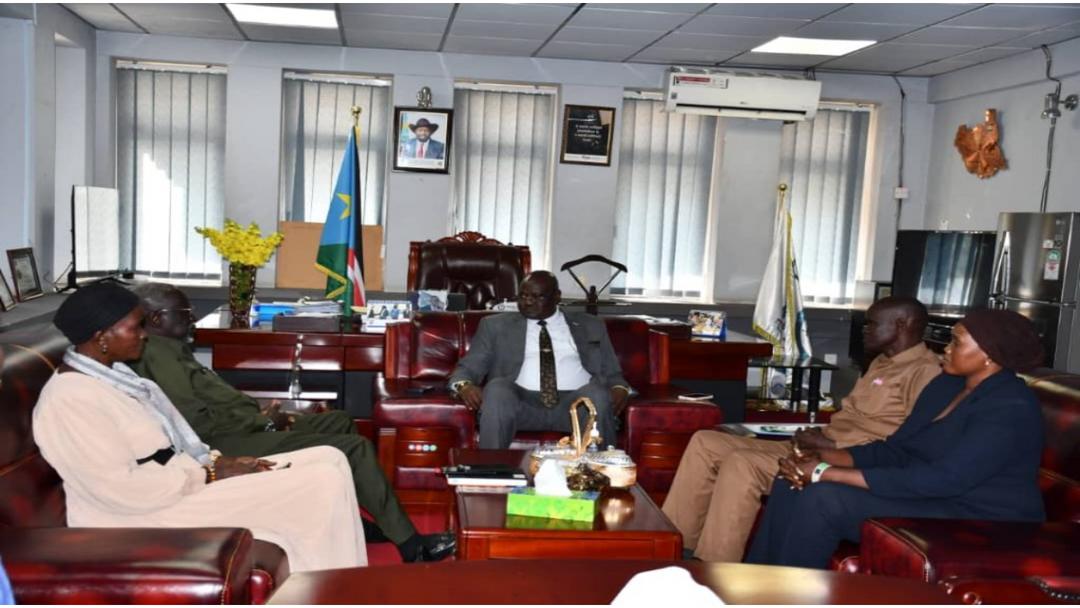
South Sudan telecommunications towers have been approved for two new sites in Jonglei State to close coverage gaps and improve security coordination. The decision follows a meeting between the national ICT minister and the Jonglei governor.
The build will prioritise North Ayod and Ayod South, where weak signal quality has hampered incident response and community services.
The Ministry of Information, Communication Technology and Postal Services confirmed the plan after reviewing a report on network shortfalls and their security impact. The rollout is expected to stabilise voice and data access for residents and local authorities.
South Sudan telecommunications towers in these locations are intended to strengthen everyday communications, support emergency operations and extend access to essential information.
South Sudan telecommunications towers: What You Need to Know
- Two state-approved towers in Jonglei will expand coverage in North Ayod and Ayod South to bolster security coordination and community access.
Recommended tools for secure, resilient networks
- Auvik – Cloud-based network monitoring and visibility
- CloudTalk – Cloud phone system for distributed teams
- KrispCall – Business calling for field and remote ops
- Bitdefender – Endpoint protection for growing networks
- 1Password – Enterprise-grade password management
- IDrive – Secure cloud backup and recovery
- Tenable Vulnerability Management – Continuous exposure assessment
Government approval and leadership
The national government authorised two South Sudan telecommunications towers to address critical coverage gaps in Jonglei. Minister Ateny Wek Ateny announced the decision after a security-focused briefing from the Jonglei governor.
The report noted that limited network reach complicates inter-agency coordination and slows rapid response.
The approved South Sudan telecommunications towers are positioned as immediate interventions to stabilise communications and reinforce state-level operations.
This aligns with broader regional pushes to improve connectivity, including initiatives tracked in 5G in Africa 2025 and long-term trends outlined in Africa’s telecom evolution.
Locations and local significance
North Ayod
One South Sudan telecommunications towers site will be built in North Ayod, birthplace of SPLM founding member William Nyuon Beny.
The location reflects both historical importance and the need to connect surrounding communities with reliable mobile and radio services.
Ayod South
The second site for South Sudan telecommunications towers is planned for Ayod South, home area of spiritual leader Makuac Tut.
The installation aims to strengthen voice and data reach across nearby settlements to support residents and local administration.
Why coverage matters in Jonglei State
Weak connectivity has constrained security communications, delayed information-sharing and disrupted public messaging.
By extending reliable service, South Sudan telecommunications towers are expected to improve incident response and restore confidence in day-to-day communications for households and businesses.
The upgrade to Jonglei State communication infrastructure will also simplify access to public information and essential services, underpinning stability and local development efforts.
Strengthening Jonglei State communication infrastructure
The focus on rural reach mirrors other African initiatives to connect underserved areas, such as community-focused projects in Nigeria documented by the ITU for rural connectivity.
The two South Sudan telecommunications towers are intended to reduce dead zones and provide consistent access for residents, leaders and first responders.
For communities accustomed to patchy signals, dependable coverage supports education, health information, commerce and civic coordination with fewer disruptions.
Security and network resilience considerations
Stronger radio and mobile reach will aid South Sudan security telecommunications by enabling faster updates and coordinated responses. Maintaining operational resilience and cybersecurity is essential as networks expand.
Independent analysis highlights persistent targeting of telecom operators and suppliers; see sector-focused reporting on cyber operations focusing on telecoms and a perspective on 5G-related risks and opportunities.
Practical guidance for device and fleet protection is available via mobile security practices.
Key details at a glance
- Approval: The ICT minister confirmed authorisation after meeting the Jonglei governor; South Sudan telecommunications towers will address immediate coverage needs.
- Sites: North Ayod and Ayod South were selected for practical reach and local significance.
- Expected benefits: Enhanced communications, stronger security operations and broader access to essential services.
What the new towers could mean for communities and security
The South Sudan telecommunications towers directly target persistent coverage gaps that undermine coordination.
More reliable signals should accelerate incident response, support community outreach and improve daily communications for families, schools and traders.
Construction, maintenance and power resilience remain challenges in remote settings. As the footprint grows, continuous monitoring, redundancy and cyber hygiene will be crucial to safeguard availability and trust.
Implications for connectivity and stability in Jonglei
Advantages include immediate gains in call reliability, data access and cross-agency coordination. The South Sudan telecommunications towers will strengthen emergency communications, reduce information delays and provide a more predictable foundation for public services.
Potential drawbacks include logistical hurdles, power continuity and the cost of ongoing maintenance. Operators and authorities must also prioritise resilience and basic security controls to protect services as utilisation rises.
Build robust telecom and IT operations
- EasyDMARC – Prevent spoofing and secure domain email
- Tresorit – Encrypted cloud collaboration
- Plesk – Manage hosting and web services at scale
- CloudTalk – Scalable cloud telephony for teams
- Passpack – Shared password vaults for teams
- Optery – Reduce your organisation’s data exposure
- Tenable Nessus – Identify and prioritise vulnerabilities
Conclusion
The government’s approval of two South Sudan telecommunications towers in Jonglei is a targeted response to coverage gaps affecting public safety and service delivery. The plan prioritises impact over scale.
By placing sites in North Ayod and Ayod South, authorities aim to stabilise communications, enhance coordination and extend access to information for underserved communities.
Execution will be decisive. Reliable power, resilient operations and clear public updates will help ensure the South Sudan telecommunications towers deliver sustained benefits across the affected areas.
Questions Worth Answering
Who approved the new towers?
- The Minister of Information, Communication Technology and Postal Services, Ateny Wek Ateny, confirmed approval after meeting the Jonglei State governor.
Where will the towers be installed?
- One tower will be built in North Ayod and the other in Ayod South, both in Jonglei State.
Why were these locations selected?
- They are underserved areas where improved coverage will support daily communications and security operations, while recognising local significance.
What problems are the towers addressing?
- They will mitigate limited network coverage that has hindered coordination, delayed information-sharing and complicated emergency responses.
How will communities benefit from better coverage?
- Residents should see more reliable calls, faster data access and improved public-service messaging for schools, health and commerce.
Will the rollout strengthen security communications?
- Yes. Better reach enables faster updates, coordinated responses and more effective incident management across agencies.
Is there a timeline for completion?
- Officials confirmed approval but did not announce construction timelines.
About the Ministry of Information, Communication Technology and Postal Services (South Sudan)
The ministry sets national policy for ICT, telecommunications and postal services in South Sudan. It coordinates with state authorities to expand network reach.
Its mandate includes improving service reliability, enabling infrastructure and public information access for communities and institutions nationwide.
The ministry also supports operational communications that underpin security coordination and essential services.
About Ateny Wek Ateny
Ateny Wek Ateny is South Sudan’s Minister of Information, Communication Technology and Postal Services. He oversees national connectivity priorities.
His portfolio includes addressing coverage gaps, improving intergovernmental coordination and guiding infrastructure upgrades.
He collaborates with state leaders to align communications investments with community needs and security requirements.