

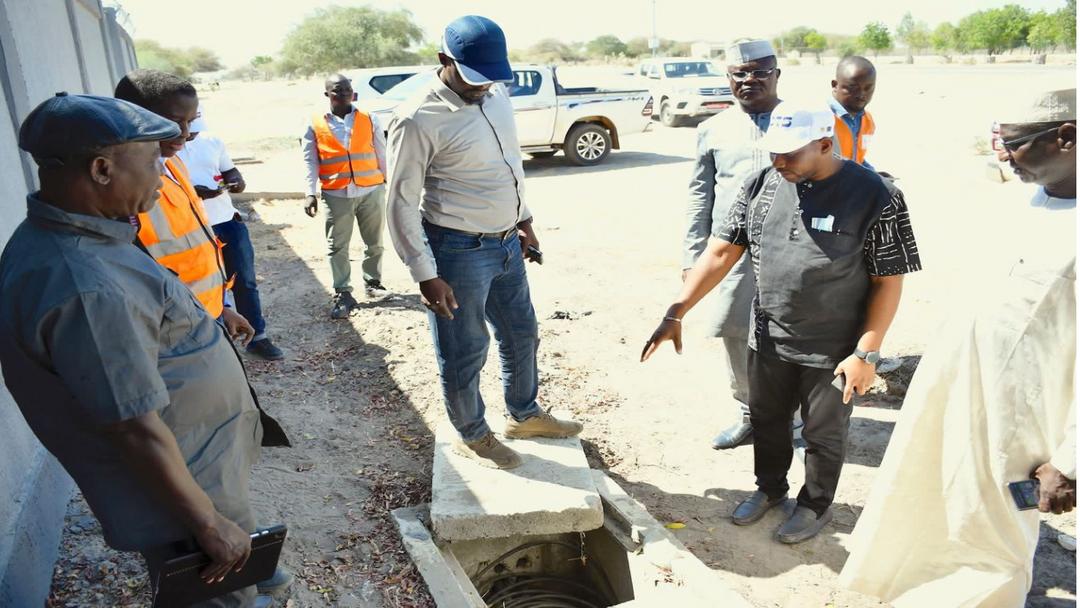
The Chad fiber optic project has been disrupted after a second cable cut in a week on the Massakory to Ngouri axis. The latest vandalism, 18 km from Massakory, did not involve theft. Senior officials visited the site on 19 November 2025 to assess damage and coordinate the response.
The EU-backed build, part of the Trans-Saharan Dorsal with Fiber Optic programme, has reached 52 percent completion since February 2024. Work is temporarily paused following the demobilisation of the control mission.
Authorities and the contractor have filed a complaint as investigations continue. The government says delivery of this strategic backbone remains a priority.
Chad Fiber Optic Project: What You Need to Know
- Two cuts in one week have paused works at 52 percent, and an investigation into Trans-Saharan Dorsal fiber optic vandalism is underway near Massakory in western Chad.
Recommended tools to secure and manage networks
- Bitdefender, enterprise-grade protection for endpoints and servers
- Auvik, cloud-based network monitoring and visibility
- IDrive, secure cloud backup for critical infrastructure data
- 1Password, strong access control for distributed teams
- Tenable Vulnerability Management, continuous risk assessment
- Tenable Nessus, industry standard vulnerability scanning
- EasyDMARC, protect domains from spoofing and phishing
- Tresorit, encrypted cloud storage for sensitive documents
Latest incidents on the Massakory to Ngouri axis
Two cuts in one week raise alarms
On 12 November and 19 November 2025, unknown actors cut a section of the backbone between Massakory and Ngouri. The latest break was about 18 km from Massakory.
No junction boxes or other equipment were taken, complicating assessment of intent in the Trans-Saharan Dorsal fiber optic vandalism case.
The company delivering the works has filed a formal complaint. An investigation is in progress to identify perpetrators and motives. The repeated breaches threaten timelines and raise operational risk for the Chad fiber optic project.
Officials assess damage and next steps
Hissein Brahim Abdelkerim, Secretary General at the Ministry of Telecommunications, Digital Economy, and Digitalization, visited the site with Inspector General Kemkil Adangran Benoit and DTS National Coordinator Ahmat Badawi Hamit.
Their visit signals the urgency of protecting exposed rural spans of the Chad fiber optic project during build-out.
Funding, scope and current status of the DTS build
What the EU’s €28.9 million backs
The DTS is a 509 km backbone linking Chad with Niger, Nigeria, Mali, Burkina Faso, Mauritania, Algeria, and Tunisia, plus 50 km within N’Djaména.
The EU’s €28.9 million supports a strategic corridor to strengthen cross-border connectivity.
This is central to the Chad fiber optic project, which aims to expand access to faster and more reliable digital services across the Sahel.
Progress to date and temporary halt
Construction began in February 2024 and stands at 52 percent. The control mission has been demobilised, creating a temporary pause that coincides with the vandalism incidents.
The government has reaffirmed its commitment to the Chad fiber optic project and plans to restore momentum as investigations proceed.
Chad fiber optic project in the regional context
A 509 km backbone to connect regions
Once operational, the Chad fiber optic project will position the country as a transit hub between the Maghreb and Southern Africa.
Route diversity and reduced latency will aid ISPs and enterprises while broadening internet access for citizens.
Similar regional advances are reshaping connectivity, including new high-speed fibre routes and the growth of 5G in Africa.
Security risks to open infrastructure
Linear infrastructure across remote terrain remains exposed to sabotage. These cuts underline that telecom networks face physical and cyber threats.
For a broader context on nation state targeting of telecoms, see PRC cyber espionage targeting telecom.
Complementary measures, from site hardening to rapid repair protocols, can help protect the Chad fiber optic project in both build and operations.
As mobile and fixed networks expand, the attack surface grows. Security insights for radio and core networks apply to long-haul fibre routes and endpoints.
See LTE and 5G network security risks and guidance on incident response planning.
Regional investment trends also highlight resilience priorities in African digital infrastructure.
Project naming, scope and motivation
Understanding the DTS identity
The Trans-Saharan Dorsal with Fiber Optic, or DTS, is the trunk route that traverses Chad toward multiple borders.
The Chad fiber optic project lies at the centre of this plan, enabling diverse routes and improved service quality over time across North and West Africa.
Why the attacks matter
Each delay risks slowing cross-border interconnection and investor confidence. Because no equipment was removed, investigators are focused on intent and prevention.
The Chad fiber optic project, therefore, depends on engineering and security disciplines working in tandem.
Implications for connectivity, investment and security
Advantages: If delivered as planned, the Chad fiber optic project will add capacity, redundancy, and reach for domestic users and neighbouring markets.
It will support integration with regional internet exchanges and improve access to digital public services, education platforms, and e-commerce.
Over time, greater capacity can improve service quality and affordability.
Disadvantages: Recurrent vandalism drives repair costs and uncertainty. The temporary halt caused by control mission demobilisation, combined with security incidents, may force resequencing of works.
These pressures could affect short-term availability targets for the Chad fiber optic project and increase the need for stronger field security and monitoring.
Net impact: With coordinated protection, rapid response, and firm funding oversight, the Chad fiber optic project can still meet its objectives.
The current investigation will be critical to deterring further attacks and restoring cadence.
Strengthen telecom operations and resilience
- Plesk, unified hosting control for service providers
- CloudTalk, cloud telephony for distributed operations
- KrispCall, business phone system for field teams
- Passpack, password management for multi site projects
- Optery, automated data removal for executive privacy
- Foxit PDF, secure document workflows for compliance
- Tresorit Business, encrypted collaboration for infrastructure teams
Conclusion
The latest cuts on the Massakory to Ngouri line show that open infrastructure needs vigilant protection. Transparent reporting and rapid repair will help stabilise the Chad fiber optic project.
EU backing, government commitment, and a strategic 509 km route remain strong. If investigations halt repeat incidents and the control mission remobilises, the Chad fiber optic project can regain pace and deliver regional gains.
Above all, the Chad fiber optic project is designed to connect people, services, and economies. Staying the course now can unlock long-term dividends in access, inclusion, and growth.
Questions Worth Answering
What is the current status of the DTS build?
- The project is 52 percent complete. Activities are paused due to the control mission demobilisation while authorities investigate the Trans-Saharan Dorsal fiber optic vandalism.
Where did the latest cable cut occur?
- About 18 km from Massakory on the Massakory to Ngouri axis. No junction boxes or other equipment were removed.
Who visited the site after the attack?
- Senior officials, including Hissein Brahim Abdelkerim, Inspector General Kemkil Adangran Benoit, and DTS National Coordinator Ahmat Badawi Hamit.
How is the project funded?
- The European Union has allocated €28.9 million as part of EU-funded telecommunications in Chad infrastructure goals within the DTS corridor.
What is the total planned length of the backbone?
- 509 km across Chad plus 50 km inside N’Djaména, with cross-border links to several neighbours.
What happens next in the investigation?
- The contractor has filed a complaint. Authorities are pursuing leads to identify perpetrators and prevent further incidents that affect the Chad fiber optic project.
What wider impact could delays have?
- Delays can slow interconnection, raise costs, and defer service improvements intended under the Chad fiber optic project.
About the Ministry of Telecommunications, Digital Economy, and Digitalization (Chad)
The Ministry sets national telecommunications policy and leads the development of the digital economy in Chad. It provides strategic direction for infrastructure and services.
Its remit covers coordination of connectivity initiatives and support for regulation to foster competition, coverage, and quality.
Through partnerships and oversight, the Ministry advances programmes that expand access and strengthen national digital capacity.
About Hissein Brahim Abdelkerim
Hissein Brahim Abdelkerim is Secretary General at the Ministry of Telecommunications, Digital Economy, and Digitalization.
He supports oversight of major connectivity programmes, including the DTS initiative aligned with the Chad fiber optic project.
His portfolio includes policy execution, stakeholder coordination, and tracking of infrastructure delivery milestones.
Explore more solutions
Protect and optimise your stack with Bitdefender, 1Password, and IDrive. Limited-time offers available.